
Modern vehicles rely on electronic control modules to manage the engine, transmission, brakes, airbags, emissions, charging system and many other functions. When one of these systems detects an unusual reading or communication problem, it may store a diagnostic trouble code and sometimes display a dashboard warning light.
Vehicle scanning allows a technician to communicate with compatible modules and retrieve this information. It can provide a useful starting point when a warning light appears, the vehicle becomes difficult to start, performance changes or a problem continues after repairs.
However, a scan does not automatically reveal which component needs replacing. The fault code identifies the system or condition that the vehicle detected. A technician may still need to examine wiring, fluids, mechanical components and live operating information before confirming the cause.
Knowing when to arrange a scan can help you respond to problems sooner and avoid replacing parts based on guesswork.
How a diagnostic scanner communicates with your vehicle
A diagnostic scanner connects to the vehicle through its diagnostic port or another approved connection method. The tool communicates with compatible electronic control modules and retrieves stored information.
Depending on the vehicle and equipment, a scan may access the engine, transmission, anti-lock braking, airbag, steering, body-control, climate-control and driver-assistance systems. The available information varies between makes, models, equipment levels and production years.
A basic code reader may only access common engine and emissions information. More capable diagnostic equipment can communicate with additional manufacturer-specific modules, display live sensor data and perform certain tests, resets or relearning procedures.
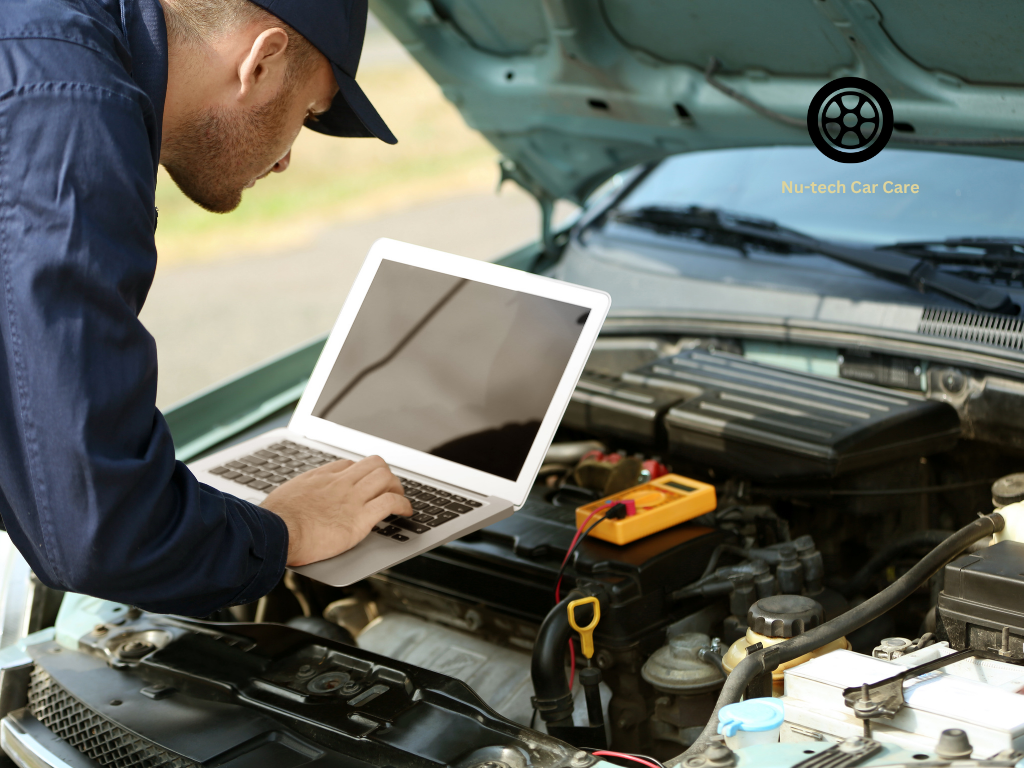
The technician may compare live information from sensors while the vehicle is operating. For example, temperature, voltage, air flow or fuel-related readings may help show whether a system is behaving as expected.
This information must be interpreted in context. A reading that is normal for one vehicle or operating condition may not be suitable for another. Access to the correct technical information and an understanding of how the system works are therefore as important as the scanner itself.
Why a fault code is a starting point, not a complete diagnosis
A diagnostic trouble code describes the condition detected by the vehicle. It does not always name the failed part.
For example, a code relating to a sensor may be caused by the sensor itself, damaged wiring, a loose connection, a power-supply problem or another fault affecting the reading. Replacing the named component without testing these possibilities may not resolve the issue.
Some codes are current or active, meaning the condition is present when the vehicle is tested. Others may be stored from an earlier event that is no longer occurring. Intermittent codes can be particularly challenging because the fault may appear only under specific temperatures, loads or driving conditions.
A technician may need to inspect connectors, test circuits, check mechanical conditions or compare live data before recommending work. Sometimes further testing is needed after an initial repair to confirm that the underlying problem has been corrected.
Clearing a code only removes the stored information and may turn off a warning temporarily. It does not repair the cause. If the condition remains, the code or warning light may return.
Arrange a Scan When a Warning Light Appears
A dashboard warning light is one of the clearest reasons to arrange vehicle scanning. The meaning and urgency depend on the symbol, its colour and whether the vehicle is behaving differently.
An engine warning light may relate to emissions, ignition, air intake, fuel delivery, sensors or another monitored system. A steady light can indicate a recorded fault that requires investigation, while a flashing light may indicate a more urgent problem. Follow the instructions in the owner’s manual and obtain professional advice before continuing to drive.
An anti-lock braking or stability-control warning can indicate that an electronically controlled safety function is unavailable or has detected a fault. Normal braking may also be affected by a separate mechanical issue, so the vehicle should be assessed rather than relying on a code scan alone.
An airbag or supplementary restraint warning may indicate a fault involving airbags, seat-belt pretensions, sensors, wiring or related modules. Because these systems are safety-related, they should be examined by a suitably equipped technician.
A battery-shaped warning commonly relates to the charging system rather than simply indicating that the battery needs replacement. The fault may involve the alternator, wiring, drive belt, battery condition or another monitored component.
Know when it may be unsafe to continue driving
Not every warning light means the vehicle must stop immediately, but some conditions require urgent attention. The owner’s manual should explain the specific symbols and recommended response for that model.
A red oil-pressure warning, severe overheating warning or significant braking problem may indicate a condition that can cause damage or affect safety. Continuing to drive could make the problem worse.
Stop in a safe place when practical, switch off the engine if the manufacturer’s instructions advise it and contact roadside assistance or a qualified workshop. Do not open a hot cooling system, as pressurised coolant can cause serious injury.
You should also stop and seek advice if the vehicle loses power suddenly, produces unusual smoke, develops a strong burning smell or becomes difficult to steer or brake. A scanner may later help identify recorded faults, but roadside safety comes first.
If you are unsure whether the vehicle can be driven, describe the warning, colour, driving behaviour and any noises or smells to a technician. This information can help them advise whether the vehicle should be driven, inspected on-site or transported.
Investigate Changes in Performance or Fuel Use
Check poor acceleration, rough running and stalling
A vehicle can develop a problem before a dashboard warning appears. Rough idling, hesitation, stalling, poor acceleration or unexpected transmission behaviour may justify diagnostic testing.
These symptoms can have electronic, electrical or mechanical causes. A rough-running engine, for example, may involve ignition, fuel delivery, air leaks, sensor information or internal mechanical conditions.
A scan may show misfire information, fuel-related data or sensor readings that help narrow the search. It may also reveal communication problems between modules. However, the technician may still need to perform physical checks, pressure tests or circuit measurements.
Describe when the symptom occurs. Information about whether the engine is cold or warm, whether the air conditioning is operating and whether the problem appears under acceleration or at a particular speed can be useful.
Intermittent faults may not occur during a short workshop visit. Stored codes, freeze-frame information and live data can provide clues, but the vehicle may need further testing under the conditions in which the problem usually appears.
Look into an unexplained increase in fuel consumption
Fuel use can change because of driving conditions, traffic, vehicle load, tyre pressure, weather and driving style. However, a noticeable and continuing increase may indicate that the vehicle needs attention.
An electronically monitored fault may affect air and fuel control, engine temperature, emissions operation or transmission behaviour. Vehicle scanning can help identify related codes or unusual readings.
A scan should be combined with appropriate checks. Incorrect tyre pressure, dragging brakes, worn ignition components, poor wheel alignment or overdue maintenance may affect fuel consumption without creating a useful diagnostic code.
Record your fuel use over several fills when possible, using a consistent method. This gives the technician more useful information than an estimate based only on the dashboard display.
Be cautious of promises that a scan alone will restore fuel economy. The correct response depends on the actual cause, and some changes may reflect operating conditions rather than a fault.
Diagnose Starting and Electrical Problems
Starting problems do not always mean the battery has failed. The cause may involve the battery, starter, charging system, wiring, immobiliser, ignition switch or an electronically controlled engine function.
A technician may begin by asking what happens when you attempt to start the vehicle. A slow crank, rapid clicking, normal cranking without ignition and complete silence point towards different possibilities.
Diagnostic scanning may reveal immobiliser, engine-management or communication faults. Battery and charging tests can then assess voltage and performance under load.
Electrical problems can also produce several unrelated-looking warnings. Low system voltage may cause modules to record communication or sensor faults, particularly during starting. The technician should consider whether multiple codes share a common electrical cause before recommending several separate repairs.
Intermittent issues may require testing after the vehicle has been parked overnight or under the conditions in which the fault occurs. Let the workshop know how often the problem appears and whether lights, accessories or recent electrical work seem to affect it.
Use suitable equipment for modern electronic systems
An ordinary diagnostic scanner and an auto current scanner serve different purposes. A scan tool communicates with vehicle modules, while an auto current scanner or current-measuring device may help a technician examine electrical current flowing through a circuit.
Auto current scanners can support testing for problems such as abnormal current draw, charging behaviour or the electrical operation of certain components. The exact equipment and method depend on the vehicle and suspected fault.
Current testing can be helpful when a battery loses charge while the vehicle is parked. The technician may need to allow the vehicle’s systems to enter their normal sleep state before measuring the remaining draw. Opening a door, operating a key or connecting equipment incorrectly can wake modules and affect the result.
Modern car tech includes networks of connected modules, so an electrical problem in one area may affect communication elsewhere. Diagnosis may require scan information, wiring diagrams, voltage tests and current measurements rather than one tool alone.
When comparing workshops, ask whether they have appropriate equipment and technical information for your make and model. Owning a scanner does not necessarily mean every system or function is supported.
Scan the Vehicle After Repairs or Overheating
Check electronic systems after mechanical or collision work
A vehicle may benefit from scanning after certain repairs, especially when work involves electronically controlled components, wiring, safety systems or areas affected by a collision.
A per-repair scan can record active and stored faults before work begins. This may help identify systems requiring further inspection and distinguish existing conditions from issues discovered during the repair.
A post-repair scan can check whether relevant modules communicate and whether faults remain. Some systems may require resets, relearning procedures, coding or calibration after a component has been removed, replaced or re positioned.
A post-scan does not by itself prove that every repair is correct. The technician may also need to complete physical inspections, functional tests, road testing or manufacturer-specified procedures.
Advanced driver-assistance features require particular care. Work involving cameras, radar, steering, suspension, wheel alignment or windscreens may affect systems such as lane assistance or automatic emergency braking. Scanning can identify faults, but calibration may be a separate process requiring specific equipment and conditions.
Investigate faults connected with overheating
Overheating can involve coolant loss, restricted circulation, a faulty thermostat, cooling fans, sensors, wiring, a water pump or other mechanical problems. Some of these conditions may generate diagnostic information, while others may not.
A scan can display coolant-temperature readings and may show faults relating to sensors, fan control or engine-management functions. This information can help guide the investigation, but it does not replace an inspection of the complete cooling system.
Professional cooling system services may include checking coolant condition and level, inspecting hoses and connections, testing pressure, looking for leaks and examining the operation of the thermostat, radiator, water pump and fans where appropriate.
Never remove a radiator cap or open a pressurised coolant reservoir while the engine is hot. Wait for the system to cool and follow the vehicle manufacturer’s instructions.
After an overheating event, arrange an assessment even if the warning disappears. Continued driving while overheated can cause serious engine damage, and a cleared code cannot confirm that the cooling problem has been resolved.
Include Scanning in Planned Vehicle Care
Vehicle scanning can support Car Maintenance, but it should not replace the checks included in a suitable service schedule. A vehicle can have worn brakes, low fluids, damaged tyres or developing mechanical problems without storing a diagnostic code.
During a planned Car Service, scanning may be appropriate when the manufacturer’s procedure calls for it, a warning light is present or the driver has reported unusual behaviour. It may also be used when a technician needs to reset a service function or assess an electronically controlled system.
The service provider should explain whether diagnostic scanning is included in the quoted work or charged separately. A basic code check may differ from detailed fault finding that involves live data, circuit testing and component inspection.
Share any symptoms when booking, even if they seem minor. A warning that appeared briefly, an intermittent starting problem or a change in fuel use can help the technician plan the correct tests.
Keep service invoices and diagnostic reports. They provide a useful history if the problem returns or another workshop needs to understand previous work.
Consider diagnostic checks before buying a used car
A diagnostic scan can provide useful information during a used-vehicle assessment. It may identify active faults, stored codes or modules that do not communicate as expected.
However, it cannot confirm the complete condition of the vehicle. Fault codes may have been cleared recently, some mechanical problems do not create codes and a scan cannot assess every aspect of accident damage, wear or maintenance history.
A thorough per-purchase inspection should include appropriate physical and operational checks as well as electronic diagnostics where relevant. The inspection scope should be confirmed before booking because services vary between providers.
A rego check is a different process. Depending on the Australian state or territory, it may provide registration details or other official information, but it does not replace a mechanical inspection or diagnostic scan. Buyers should also consider an appropriate vehicle-history check for matters such as finance owing, write-off records or stolen-vehicle status.
If a scan identifies a fault, ask what further testing is needed and whether the likely repair can be estimated. Avoid treating a cleared dashboard light as proof that the vehicle is problem-free.
Choose the Right Workshop and Understand the Results

Ask about diagnostic equipment and technician experience
Modern vehicles vary considerably in their electronic systems. A workshop should have equipment that can communicate with the relevant make, model and modules rather than relying only on a basic universal reader.
Ask what type of scan is included and whether the technician can access manufacturer-specific information. Some advanced functions, coding procedures and secure systems may require specialised equipment, subscriptions or authorised access.
The workshop should also be willing to explain the diagnostic process. A statement that the scanner “said a part was faulty” is less useful than an explanation of the code, supporting tests and reason for the recommendation.
Trust signals may include clear written quotations, itemised invoices, suitable qualifications, transparent warranty terms and diagnostic reports that identify the vehicle and relevant findings. Avoid relying only on promotional claims or a list of expensive equipment.
Nu-Tech Car Care can be considered when you need vehicle scanning alongside servicing or mechanical fault investigation. Before booking with Nu-Tech Car Care or another workshop, provide the vehicle make, model, year, warning lights and symptoms so the team can confirm whether it has suitable diagnostic capability.
Request a clear explanation before approving repairs
A useful diagnostic result should explain which system recorded the fault, whether the code is active or stored and what additional testing was completed. It should also separate confirmed faults from possible causes that still require investigation.
Ask whether clearing the code is part of the diagnosis or whether repairs are recommended first. If a component needs replacement, the workshop should explain the evidence supporting that recommendation.
You should also understand what happens after the repair. The technician may need to clear the code, repeat the scan, complete a relearn or road-test the vehicle. Some systems require a driving cycle before all monitoring checks can run again.
The final report should identify any unresolved issues and indicate which matters need urgent attention. If further work is optional or can be planned later, ask how delaying it may affect safety, reliability or vehicle performance.
If your vehicle has displayed a warning light, developed starting problems or changed noticeably in the way it drives, arrange a professional assessment. Vehicle scanning can provide valuable information, but the best results come when scan data is combined with careful testing and a clear explanation of the underlying fault.